
If you’ve followed my blog for a while, you probably know it primarily as my little corner of the internet for beauty, skincare, makeup and all things aesthetically pleasing. But this blog has always been a personal diary too, and lately I’ve wanted to share more of the other things that genuinely make me happy.
And one of those things is plants.
My plant obsession actually started during lockdown. Like many people, I suddenly found myself spending an extraordinary amount of time at home, and bringing a little more greenery indoors felt comforting. What started with a few plants very quickly turned into a proper hobby: learning their names, figuring out what each one likes, watching for new leaves and inevitably rearranging them around the house because surely this particular spot has better light.
Years later, the obsession is very much still alive.
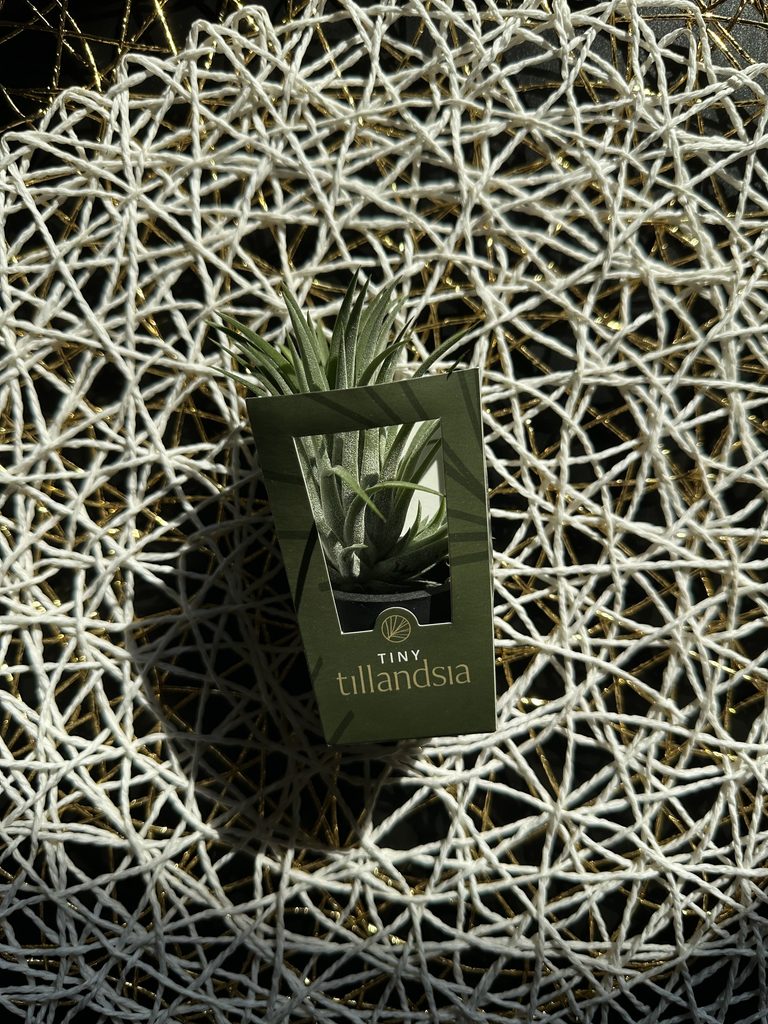
Which brings me to my newest tiny addition: a Tillandsia, better known as an air plant.
A Plant That Doesn’t Need Soil?
The most fascinating thing about Tillandsia is that it doesn’t need to be planted in soil. Air plants are epiphytes, meaning that in nature they grow attached to things such as trees and branches rather than rooting themselves into the ground like a conventional houseplant.
Instead of relying primarily on roots to take up water and nutrients, Tillandsias have specialised structures called trichomes covering their leaves. These help them absorb moisture and nutrients from their surroundings.
The roots, when present, are mainly useful for anchoring the plant rather than feeding it.
Even after owning plenty of houseplants, there is still something slightly bizarre about picking up an entire living plant with no pot and no soil attached to it. It almost looks like a little botanical sculpture.
My Tiny Tillandsia
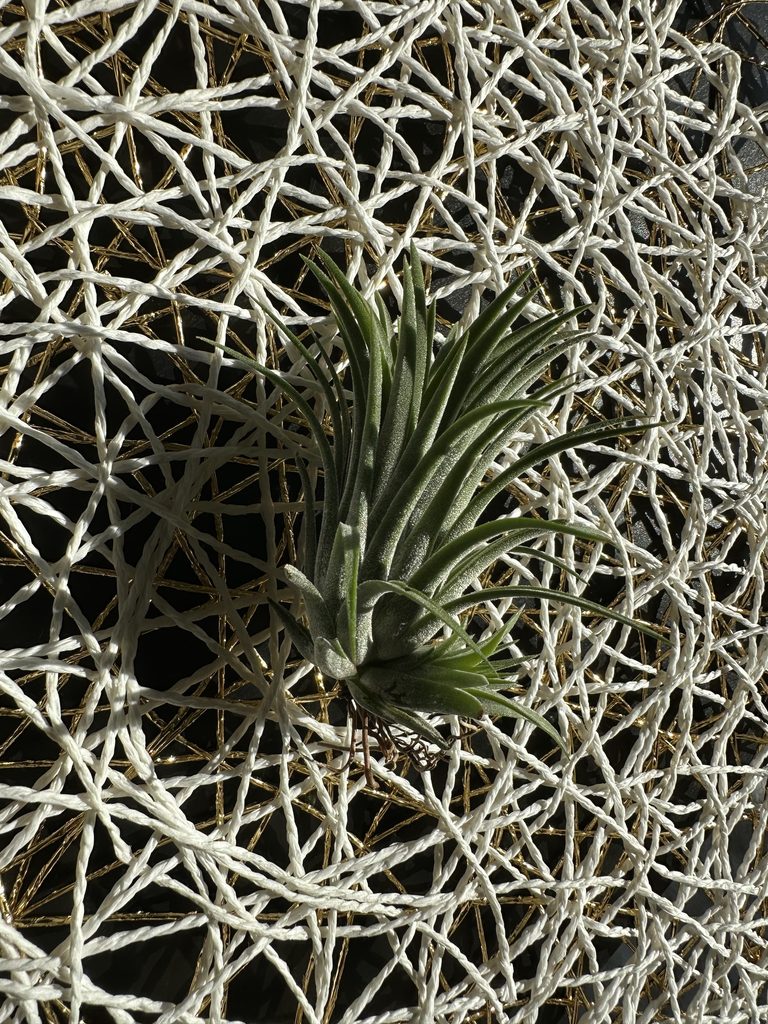
Mine came packaged simply as a “Tiny Tillandsia”, tucked into the cutest little green cardboard sleeve. I was immediately drawn to its spiky, silvery-green foliage.
The leaves have that characteristic slightly fuzzy, almost frosted appearance caused by those tiny trichomes. In direct light, the texture becomes particularly beautiful.
And because there is no pot involved, there are so many possibilities for displaying it.
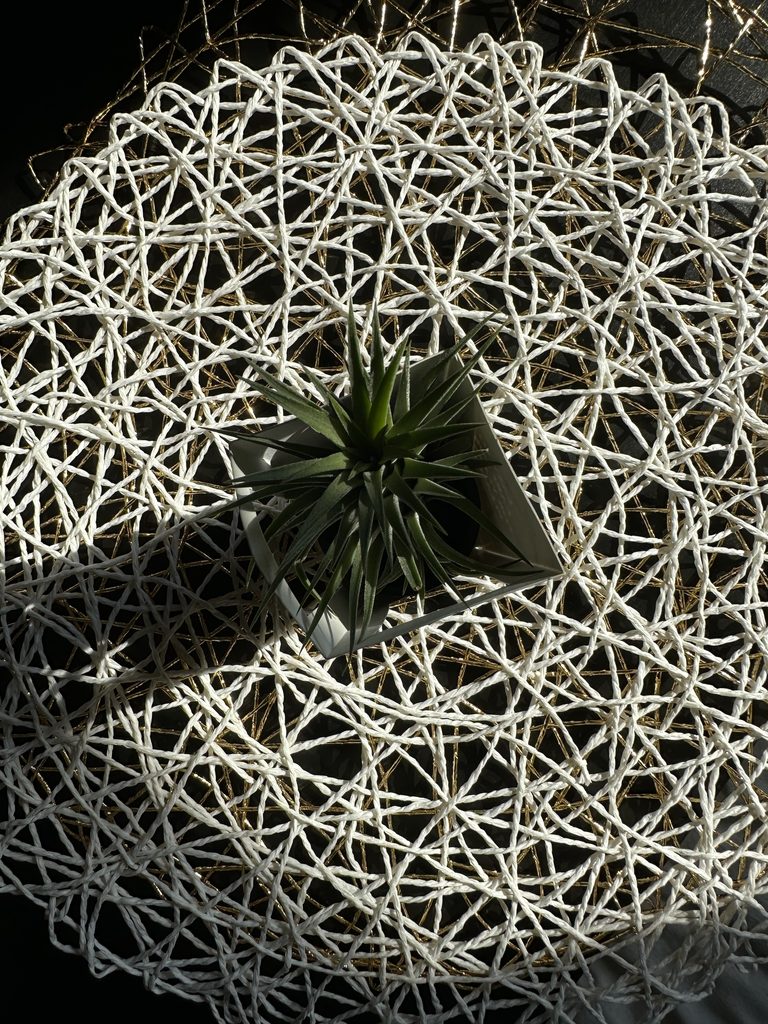
You can place an air plant in a little ceramic dish, inside an open glass vessel, on a piece of wood or simply amongst your existing décor. I actually think that freedom is one of the nicest things about Tillandsias. You’re not trying to find a decorative pot that happens to fit the nursery pot; the plant itself becomes the decoration.
Possibly One of My Lowest-Maintenance Plants
Another reason I love the idea of air plants is that they’re relatively low maintenance.
They don’t need repotting. There is no soil spilling everywhere. You don’t have to worry about finding the perfect potting mix. And they’re small enough to fit into spaces where a conventional houseplant wouldn’t necessarily work.
That doesn’t mean they can simply be forgotten, though.
Tillandsias still need bright light, water and good air circulation. Depending on the conditions in your home, they can be watered by thoroughly wetting or soaking them periodically and then allowing them to dry completely. This last part is important: leaving water trapped between the leaves can encourage rot.
I prefer thinking of them as low maintenance rather than no maintenance.
They also tend to appreciate bright, indirect light. Some varieties can tolerate gentle direct sun, but intense midday sunlight—especially behind glass—can be harsh.
For me, that is still wonderfully uncomplicated compared with some of the more demanding plants in my collection.
The Ultimate Conversation Starter
One thing I hadn’t really considered before getting an air plant is what a brilliant little talking point it is.
Someone visits, sees a random plant sitting on a shelf without a pot and inevitably asks:
“Wait… where’s the soil?”
And suddenly you’re explaining that yes, it is a real plant and yes, it actually lives like that.
I love having unusual little objects around my home that make people curious, and a Tillandsia fits perfectly into that category. It’s botanical décor, but it’s also something living that changes and grows.
For small apartments in particular, I think they’re such a fun way of adding greenery without sacrificing much space.
From Beauty Products to Plants
I did wonder whether plants really belonged on a blog that has become so beauty-focused.
Then I remembered: it’s my blog.
I’ve always viewed this space as a kind of online personal diary. Beauty happens to be a huge part of what I enjoy, but it isn’t the only thing I enjoy. My plant hobby has been part of my life since lockdown, and it seems strange not to document it simply because it doesn’t fit neatly between lipstick reviews and skincare posts.
There is actually a similar satisfaction to both hobbies for me. I love beautiful packaging, textures and colours in beauty, and I love unusual foliage, shapes and textures in plants. Both involve collecting things I find beautiful, learning far more about them than strictly necessary and convincing myself that there is absolutely room for just one more.
So perhaps the crossover isn’t quite as random as it seems.
Is an Air Plant Worth Getting?
If you’re someone who loves plants but doesn’t necessarily want another large pot taking up space, I think Tillandsias are incredibly charming.
They’re tiny, unusual, relatively easy to care for and endlessly fun to style. They would also make a sweet little gift for someone who likes greenery but isn’t necessarily an experienced plant parent.
For me, though, this one is simply another addition to a hobby that unexpectedly became a lasting part of my life.
Lockdown may have started the plant obsession, but clearly no one informed me when it was supposed to end.
And judging by the fact that I’m now dedicating entire blog posts to tiny soil-less plants, I don’t think it’s ending anytime soon. 🌿

Leave a Reply